

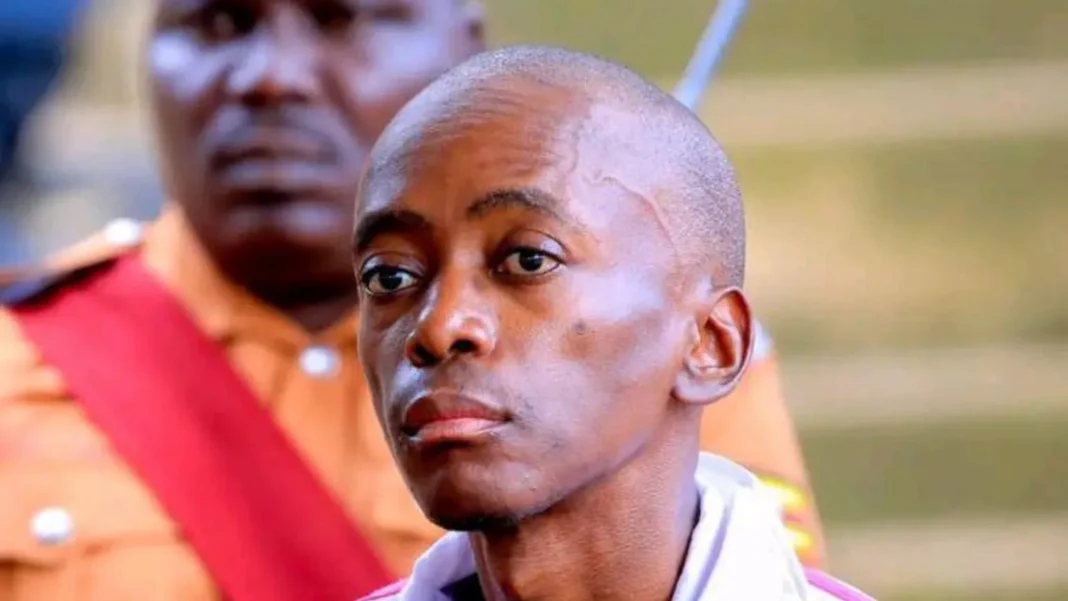
Jailed Christopher Okello Onyum has formally filed a memorandum of appeal challenging the death sentence imposed on him in April 2026 for the murder of four toddlers at the Ggaba Early Childhood Development Program in Kampala.
Okello, who holds dual Ugandan and US citizenship, is seeking to overturn both his conviction and sentence, arguing that his trial was marred by serious legal and evidential errors that led to a miscarriage of justice.
In his appeal, he contends that the trial judge failed to properly evaluate key evidence presented in court. He further argues that the court did not give adequate consideration to medical reports concerning his mental health during the proceedings.
Okello also maintains that the death sentence is excessively harsh and should be set aside. He has 14 days within which to pursue his appeal.

During the original trial, the High Court rejected his insanity defense, ruling that he was mentally fit at the time of the attack and fully responsible for his actions. Justice Alice Komuhangi Khauka described him as “very sane” during the incident, stating that the crime was deliberate and exceptionally brutal.
Court records show that on April 2, 2026, Christopher Okello Onyum, aged 38, entered the Ggaba Early Childhood Development Program and fatally stabbed four toddlers: Eteku Gideon, Keisha Agenorwoth, Sseruyange Ignatius, and Odeke Ryan, all of whom were between one and two years old.
The court found that he used a kitchen knife during the attack and targeted the children while they were completely defenseless.
Prosecutors relied on testimony from 18 witnesses, supported by forensic and digital evidence. This included DNA findings linking Okello to the handle of the murder weapon, CCTV footage tracing his movements before the attack, call data placing him at the scene, and eyewitness accounts from daycare staff who said they saw him attacking the children.
During the trial, the prosecution also alleged that Okello admitted to the killings and described them as a “human sacrifice” intended to bring him wealth. However, he later denied the allegations, pleaded not guilty, and insisted he was suffering from mental illness at the time of the attack, arguing that he was incapable of forming criminal intent and should be acquitted on grounds of insanity.
Following the judgment, Okello was sentenced to death by hanging. Although capital punishment remains legal in Uganda, it is rarely enforced, with the last recorded execution taking place in 2005.
The case has continued to attract widespread public attention due to its severity and the complex legal debates surrounding mental health, criminal responsibility, and sentencing in capital offences.